Load shedding taught most households to size a system around lights, the fridge and Wi-Fi. Air conditioning is a different animal. After the geyser it is usually the biggest single appliance in the house, and it is exactly what people want most when it is hot and the power is out.
Here is how to work out whether your solar and backup system can carry one, or what it would take to get there.
Two numbers: running load and start-up surge
Every appliance has two numbers that matter. The running load, in watts or kilowatts, is what it draws once it has settled. The surge is the brief spike when a motor starts. A fixed-speed air conditioner compressor can pull several times its running load for a moment, and that spike is what makes undersized inverters overload and shut down.
Inverter-type air conditioners ramp up gently, so their surge is far lower. That is one more reason to buy an inverter unit if you plan to run it from backup power. The word inverter appears twice in this story: an inverter air conditioner varies its compressor speed, while a solar inverter converts panel and battery power into household power.
| Unit size | Typical running draw | Per 6 hours of use |
|---|---|---|
| 9,000 BTU | about 0.5 to 0.8 kW | about 3 to 4 kWh |
| 12,000 BTU | about 0.7 to 1.2 kW | about 4 to 7 kWh |
| 18,000 BTU | about 1.2 to 1.8 kW | about 7 to 10 kWh |
| 24,000 BTU | about 1.6 to 2.4 kW | about 10 to 14 kWh |
These are approximate figures for inverter units working hard. Always check the nameplate on the actual unit.
A worked example
Take a 12,000 BTU unit in a main bedroom that averages about 0.8 kW while running, and you want it for six hours. That is roughly 5 kWh.
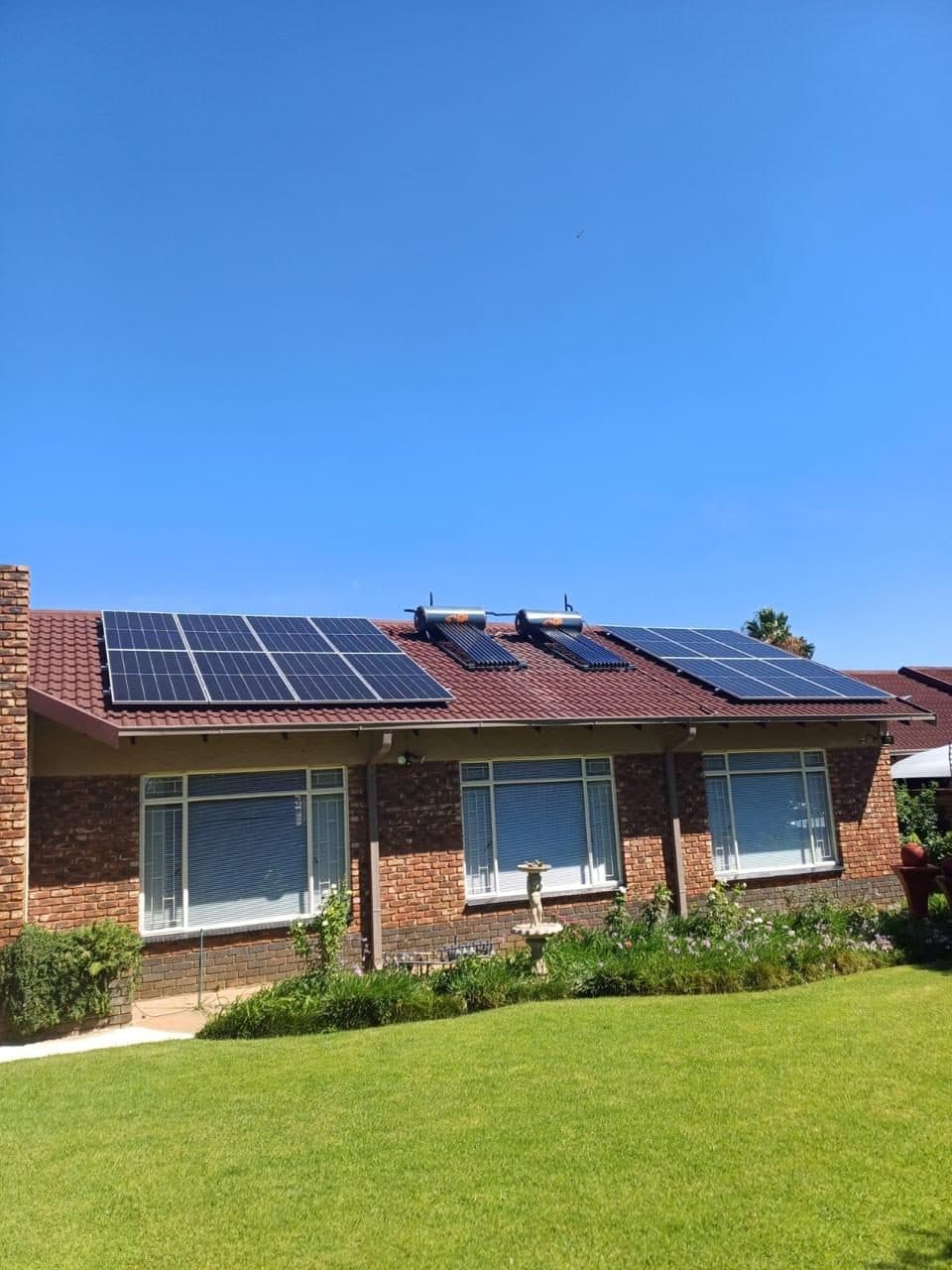
On a typical day a kilowatt of panels on the Garden Route produces somewhere around 4 kWh, less in winter and on overcast days. So the air conditioner alone wants in the region of 1.2 kW of panels, on top of everything else your home uses.
Now the night question. If you want that same unit to run through the night on battery alone, you need about 5 kWh of usable battery for the air conditioner, on top of the fridge, lights and router. That is why most households run aircon straight from the sun by day and use their batteries for the essentials after dark.
Which circuits should the aircon be on?
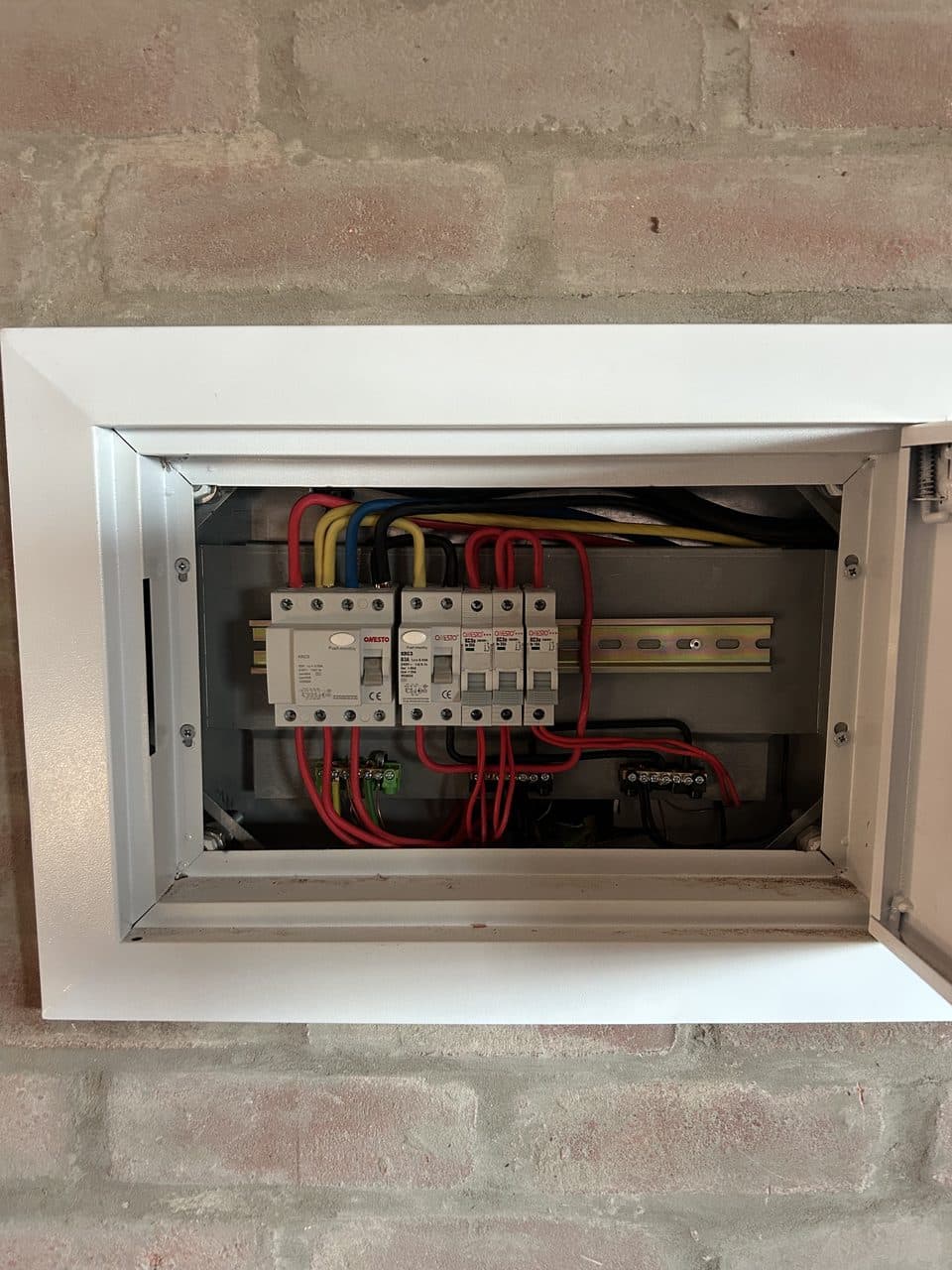
Most systems split the house into essential circuits, which the inverter backs up, and non-essential circuits, which only run when the grid or enough sun is there. Where the air conditioner lives on that split drives the cost of the whole system.
- Non-essential, daytime on solar: the simplest and cheapest. The aircon works when the sun is out or the grid is on, and drops out in the evening or in an outage.
- Essential, fully backed up: the aircon keeps working during outages, but the inverter and battery must be sized for its load and surge. This is the most expensive route.
- A mix: one bedroom unit on essential circuits, the rest on non-essential. A sensible compromise for many homes.
Mistakes we are called out to fix
- An inverter that handles the running load but not the surge, so it trips every time the compressor starts.
- An air conditioner sharing a circuit with sockets, so one appliance overloads the whole circuit.
- Heavy loads plugged into backed-up sockets that were never rated for them.
- A solar or inverter installation with no Certificate of Compliance, which becomes a problem when the house is sold.
Our backup power and solar service sizes the system to your real usage, and we issue the certification the work needs. For the wider comparison of inverter, solar and generator options, see our load shedding backup guide. If you are selling soon, read about the electrical COC for selling a house.
How we size it
We start with your distribution board, a list of what you want to run, and your electricity bills. From that we work out the load, the surge and how much you want backed up, then give a fixed written quote. Ask for a free quote or call 082 773 9913. For the basics of whether aircon suits your home at all, see is air conditioning worth it in Mossel Bay.
Common questions
Can a 5 kW inverter run an air conditioner?+
Usually yes for one or two inverter-type units, provided the rest of the load is considered and the inverter's surge rating suits the compressor. It is a question of the total load at the same moment, not any single appliance.
Will an air conditioner drain my batteries overnight?+
It can. A bedroom unit running six to eight hours uses several kWh, which is a large share of a typical home battery. Most households run it on solar by day and keep the battery for essentials at night.
Is it safe to plug an air conditioner into a socket on backup power?+
Only if that circuit is rated for it and on the correct side of your board. Heavy loads belong on dedicated, correctly protected circuits, not shared sockets.